Tag Archives: thoughts

Analyzing Harry Potter and the Sorcerer’s Stone with the Prime Framework

The Prime Framework offers a unique perspective on character relationships and narrative significance in Harry Potter and the Sorcerer’s Stone. By categorizing characters into hierarchical orders, we can better understand how they contribute to the overall story. Here’s the breakdown:

This structure aligns with their narrative importance and relational significance within the story.

The Prime Framework allows us to see how each character plays a role in shaping the narrative, with the core trio of Harry, Ron, and Hermione driving the action, while Voldemort, Snape, and Draco introduce conflict. Dumbledore and Hagrid, as prime figures, guide and support Harry without directly engaging in the main conflicts, adding depth and complexity to the story’s progression.

This approach helps us appreciate the layered character dynamics that make Harry Potter and the Sorcerer’s Stone such a compelling narrative. By categorizing characters into orders based on their narrative roles, we can see how the story’s structure unfolds.

2nd Order: Core Protagonists

Harry Potter, Ron Weasley, and Hermione Granger are the heart of the narrative. They drive the plot forward by actively engaging with the challenges and mysteries at Hogwarts. Their teamwork and evolving friendship are central to the story’s progression. Harry, as the main protagonist, leads the way, but Ron and Hermione are essential in solving puzzles, facing dangers, and ultimately confronting the antagonist.

3rd Order: Antagonists and Conflict Creators

Voldemort (via Professor Quirrell), Professor Snape, and Draco Malfoy occupy the 3rd order. These characters create the central conflicts that propel the story forward. Voldemort, even in his weakened state, represents the ultimate threat to Harry and the wizarding world. Snape adds layers of complexity with his ambiguous actions, and Draco serves as a direct rival within the school, highlighting the social and moral challenges Harry faces.

Prime Orders: Guiding and Supporting Figures

Albus Dumbledore and Hagrid are prime characters who provide essential support and guidance. Dumbledore, the wise and powerful headmaster, subtly influences the narrative, providing crucial wisdom and moral direction without directly intervening in the main conflicts. Hagrid, on the other hand, introduces Harry to the magical world and offers unwavering support and friendship, helping to ground Harry as he navigates his new life at Hogwarts.

Why This Structure Fits the Prime Framework

The Prime Framework effectively organizes these characters based on their relational significance to the story. The 2nd order characters are those who actively drive the narrative, while the 3rd order characters introduce conflict and challenge. The prime orders consist of figures who guide, support, and influence the protagonists in crucial ways, ensuring their success and development without directly engaging in the story’s central conflicts.

By using the Prime Framework, we gain a clearer understanding of the narrative dynamics in Harry Potter and the Sorcerer’s Stone, revealing how each character contributes to the story’s overall arc and thematic depth. This approach can also be applied to other stories in the series, or even to different narratives, offering a structured way to analyze character relationships and significance.

Examination of the Lion King with the Prime Framework

In The Lion King, the distribution of character influence and screen time can be effectively analyzed using the Prime Framework, a conceptual model that organizes entities into hierarchical orders based on their relational significance. In this context, the story itself acts as the root node, with characters distributed across the 2nd, 3rd, and prime orders depending on their narrative roles and contributions.

This structured approach not only highlights the importance of each character within the narrative but also demonstrates the interconnectedness of their roles in shaping the overall arc of the story.

The screentime for each character or character unit is as follows:

Note that this is not an ordered list, but representative of each character’s node within the Prime Framework. It should not be assumed that each story adheres perfectly to the expected stable distribution, but it should be relatively close. In the case of this story, in particular, it is.

Root Node: The Story Itself

1. The Lion King is the root node. The entire narrative and character relationships stem from this central point.

2nd Order: Simba, Nala, Timon, and Pumbaa

2. Simba: As the main protagonist, Simba represents the base prime of the 2nd order. His journey is central to the narrative.

4. Nala: Nala supports and challenges Simba, making her a key part of the 2nd order.

8. Timon and Pumbaa: They serve as comic relief and emotional support, helping Simba through his journey. Their combined influence places them solidly in the 2nd order, contributing significantly to Simba’s growth and development.

3rd Order: Scar, Zazu, and the Hyenas

3. Scar: The primary antagonist fits into the 3rd order, directly opposing the 2nd order characters, especially Simba.

6. Zazu: Zazu serves as the royal advisor and is a connection between the 2nd and 3rd orders, fitting within the 3rd order as he often mediates between the protagonists and antagonists.

9. The Hyenas (Shenzi, Banzai, Ed): These characters collectively support Scar, adding to the antagonistic force in the 3rd order. Their combined influence creates significant challenges for the 2nd order characters.

Prime Orders: Rafiki and Mufasa

5. Mufasa: Mufasa, though no longer living, remains a guiding force in Simba’s life. His presence is felt throughout the story, making him part of the prime order. He represents the enduring legacy and moral compass that influences Simba’s actions.

7. Rafiki: As a spiritual guide, Rafiki’s influence is profound yet subtle, placing him in the prime order. His role is critical in guiding Simba but does not directly compete with the influence of the 2nd or 3rd order characters.

Why This Structure Fits the Prime Framework:

2nd Order: The characters in the 2nd order (Simba, Nala, Timon, and Pumbaa) are central to the narrative’s progression. They are the primary agents of action and development within the story.

3rd Order: The 3rd order (Scar, Zazu, and the Hyenas) represents forces that create conflict and provide challenges to the 2nd order. Scar is the main antagonist, while Zazu and the Hyenas provide additional layers of complexity and opposition.

Prime Orders: Mufasa and Rafiki, being part of the prime orders, influence the narrative in a more abstract or spiritual manner. They are not directly involved in the conflict but provide critical guidance and moral direction that shapes the story’s outcome.

This categorization within the Prime Framework demonstrates how influence and narrative importance are distributed across the characters, reflecting their roles and significance within the overall story structure.


(It should be noted that Zazu and Mufasa could be considered to be interchangeable as they both have a thematic connection to Scar and could serve as a 6, and this showcases the arbitrary nature of applying the framework.)


This pattern appears to be consistent across many different stories and especially Disney stories, suggesting that there is a strict formula that might be applied to a story in order to ensure quality narrative flow.

Some additional familiar examples include the Little Mermaid and Hercules, outlined below:

(Note the way the 9 node in a Disney story tends to be a multi-character, possibly representative of a ‘power of antagonism.’ Is this intentional, or an accidental product of natural creative storytelling?)

The Prime Framework provides a powerful lens for understanding the hierarchical structure and relational significance of characters within a narrative. In categorizing characters into 2nd, 3rd, and prime orders, the framework helps to reveal the underlying dynamics that drive a story forward. This structured approach not only highlights the importance of each character but also demonstrates how their interactions shape the overall narrative arc.

Next Steps

To further explore the Prime Framework’s applicability, one could analyze additional stories across different genres, such as Star Wars or Batman, or even mythologies. This would help identify whether the patterns observed in The Lion King are consistent across other narratives, suggesting a potential formula for ensuring quality storytelling. Future research could also involve examining other literature, and other forms of media to determine the framework’s broader utility.

Examination of Our Solar System with the Prime Framework

According to the Prime Framework, any system of sufficient mass will naturally evolve so that one or more 2nd order entities will emerge and accumulate the majority of mass or influence within the system. This occurs as a result of the simple multiplication of elements over time.

Typically, the first entity in such a system will gain an advantage, leading to its expansion. System stability, evidenced by the typical distribution of apparently stable systems across various domains, generally aligns with a distribution between 70%/20%/10% to 80%/20%, while expansion of the 2nd order beyond 80% may result in system destabilization.

Visual representations of a 9-node system in which nodes are connected to their multiples and factors.

In the context of the solar system, gravity serves as the fundamental mechanism for interaction, with the sun as its source. The sun’s gravitational influence extends to all entities within the system, shaping their interactions.

According to the core accretion model of the solar system’s early formation, Jupiter was the first massive body to begin accumulating significant mass, placing it firmly in the 2nd order. The earliest matter to accumulate can be represented numerically by the number 2, with subsequent matter represented by 4, 8, 16, and so on. This matter primarily contributed to the formation of Jupiter, first composing its core and then accumulating into the gas that surrounds it, forming the gas giant we know today. As a result, Jupiter, as the 2nd order entity, comprises approximately 71% of the planetary mass in the solar system, more than twice the mass of all the other planets combined.

Accretion disk, source: Wikipedia.org

The next significant body to accumulate mass was Saturn, which occupies the 3rd order, represented by numbers 3, 6, 9, and so forth. Gravitational interaction between the growing Jupiter and early Saturn gave an ‘advantage’ to Jupiter in mass development, though this advantage was not so extreme as to prevent Saturn from developing. However, because Jupiter occupied the 2nd order, less mass was available for Saturn in the 3rd order, leading to slower growth. Today, in our stable solar system, Saturn accounts for roughly 21% of the planetary mass.

Later in the system’s development, Neptune and Uranus formed, each representing unique Prime orders (5 and 7). However, by this time, most of the available mass had already been absorbed by Jupiter and Saturn in the 2nd and 3rd orders, leaving less for Neptune and Uranus. As a result, these planets collectively gathered only 7% of the available mass.

The remaining orbiting bodies in the solar system comprise a negligible (~1%) amount of mass compared to the first four planets and represent the multiplication of higher-order Prime nodes (such as 11, 13, 17, 19, and beyond). Earth, for example, could be considered a high Prime node, representing significant novelty within the system as the only inner terrestrial planet with surface water, a stable magnetic field, and advanced life.

Planet sizes, source: NASA

The overall distribution of mass in our relatively stable planetary system is approximately 71/21/7, which aligns well with the Prime Framework’s prediction of stable systems. It could also be hypothesized that the injection of significant external matter into the system might push Jupiter beyond its point of stability, leading to a collective destabilization of the system and a potential ‘bursting’ of the planetary ‘bubble.’

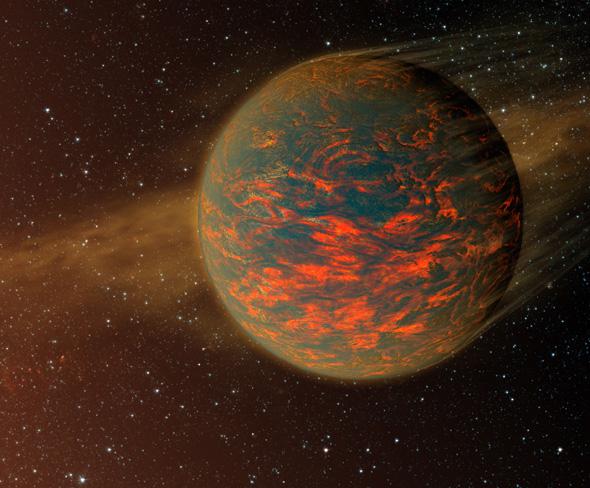
55 Cancri e, source: Slate

Interestingly, at least one exoplanetary system resembles our own: the system surrounding 55 Cancri A. This system is believed to be about 10 billion years old, much older than our own, and exhibits an apparent distribution of 76/16/6, with two large gas giants occupying the 2nd and 3rd orders. The Prime orders contain only a very small fraction of the planetary mass. This seems to support the idea that system stability occurs around the 80/20 distribution, although we cannot directly observe the system’s evolution, as astronomical changes occur over billions of years.

Further examination of other exoplanetary systems could provide additional testing grounds for the Prime Framework in the context of planetary mass evolution in star systems. However, discovering exoplanetary systems remains challenging, and our ability to accurately measure those we have found is still developing. As technology advances, we may eventually determine whether the stable distribution of mass in any astronomical system indeed lies within the 80/20 range. Until then, we must focus on systems that are much younger and closer to home.

Coffee Mugs and Question Marks

There’s a glass coffee mug on the table to my right. I bought it from the Dollar General. I think. As in, my brain currently possesses the necessary connections that allow me to ‘remember’ that I bought this mug at the Dollar General, but honestly, I’m only about 95% certain that’s true and I can’t tell you with confidence that the store in question is actually called the Dollar General, which highlights the infallibility of human experience.

So did I buy it from the Dollar General? I don’t have a receipt. There might be security video from the encounter, but it’s a dollar store and this was months ago, so that seems unlikely. Anyone who was at the store at the time of my purchase will have no memory of my presence.

I have no idea what I was wearing. I don’t know what the weather was like. I don’t remember anything else about that particular day, and the only real information I have about the glass in front of me is that I have it. The only ‘evidence’ of its origin is a single bit of data in my head that swears I got it at the Dollar General sometime a few months ago. So did I buy it from the Dollar General? Is there a single, provable history for the origin of this particular glass?

What about the glass? It’s glass. Which was sand. We can prove that the glass was sand by testing the chemical composition of the glass, we might even be able to determine how old the glass is and where the sand used to make the glass came from, but could we ever possibly know anything about the histories of the individual grains of sand used to create the glass?

No. We could not. There is no single, provable history for the materials used to create the glass. At some point during our look through the history of the glass, the picture becomes fuzzy. The data becomes unreachable and thus, irrelevant. Nothing in the future will ever need to know anything about the history of the glass. No quark or molecule or person actually cares about where the sand came from.

As far as the universe is concerned, the glass doesn’t need to have a single history.

The reality of any history appears to be dependent on the existence of evidence for it in the present.


Stephen Hawking argued that quantum mechanics prohibits a single consistent history.

“The top-down approach we have described leads to a profoundly different view of cosmology, and the relation between cause and effect. Top down cosmology is a framework in which one essentially traces the histories backwards, from a spacelike surface at the present time. The noboundary histories of the universe thus depend on what is being observed, contrary to the usual idea that the universe has a unique, observer independent history.”1


If consistent histories are localized, dependent on the evidence in support of those histories, then the ability to record and transfer that evidence would increase the scope of the locality.

Imagine a local consistent history as a bubble. If you teach the people inside the bubble to speak (and check their histories against one another), the bubble grows. If you give them the internet, the bubble becomes massive, relative to when consistent histories were dependent on two people standing in front of each other and witnessing the same event and then remembering it the same until such time that their subjective memory of the event changes.


  1. Hawking, S. W.; Hertog, Thomas (2006-06-23). “Populating the landscape: A top-down approach”Physical Review D73 (12): 123527.